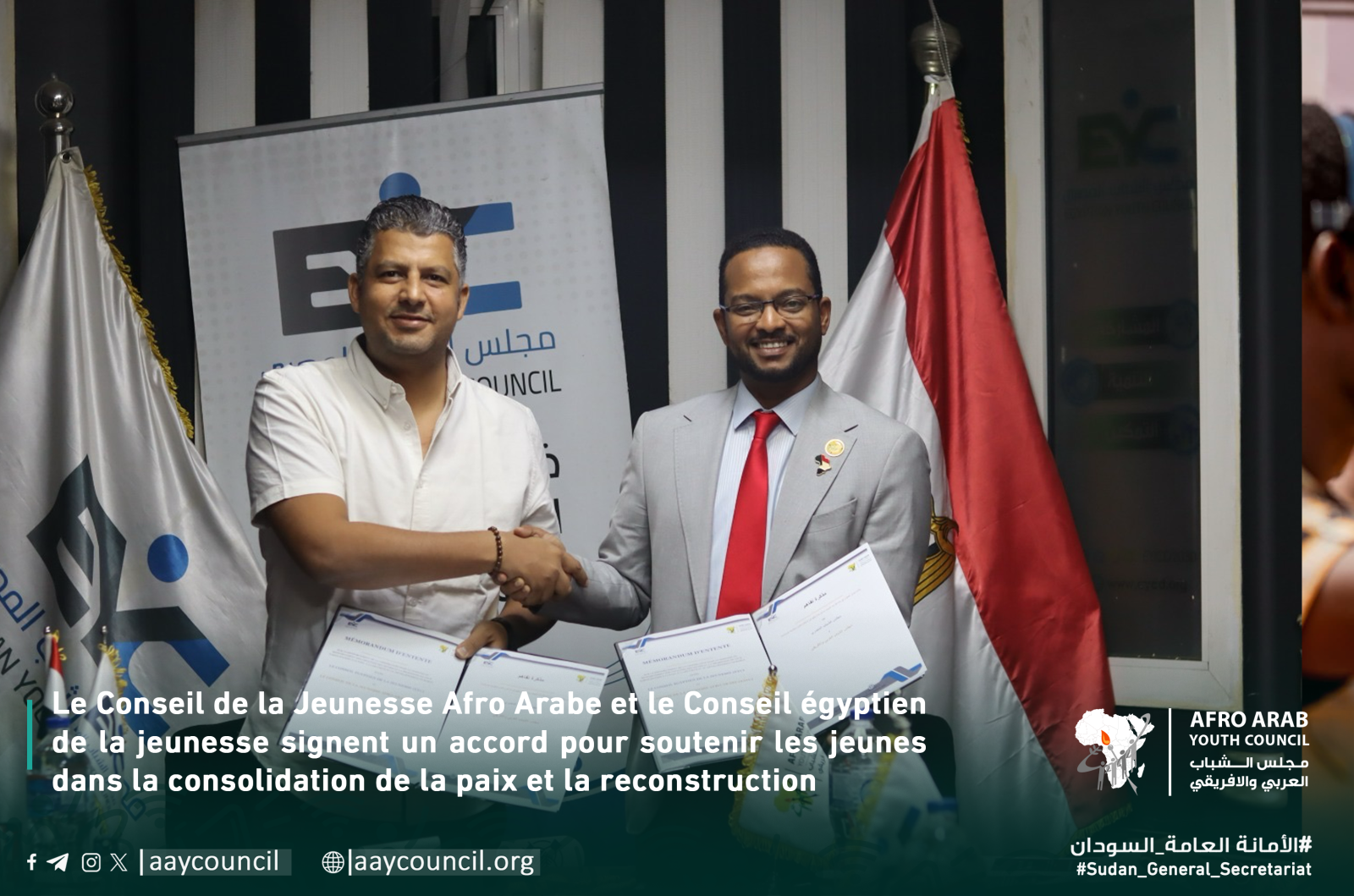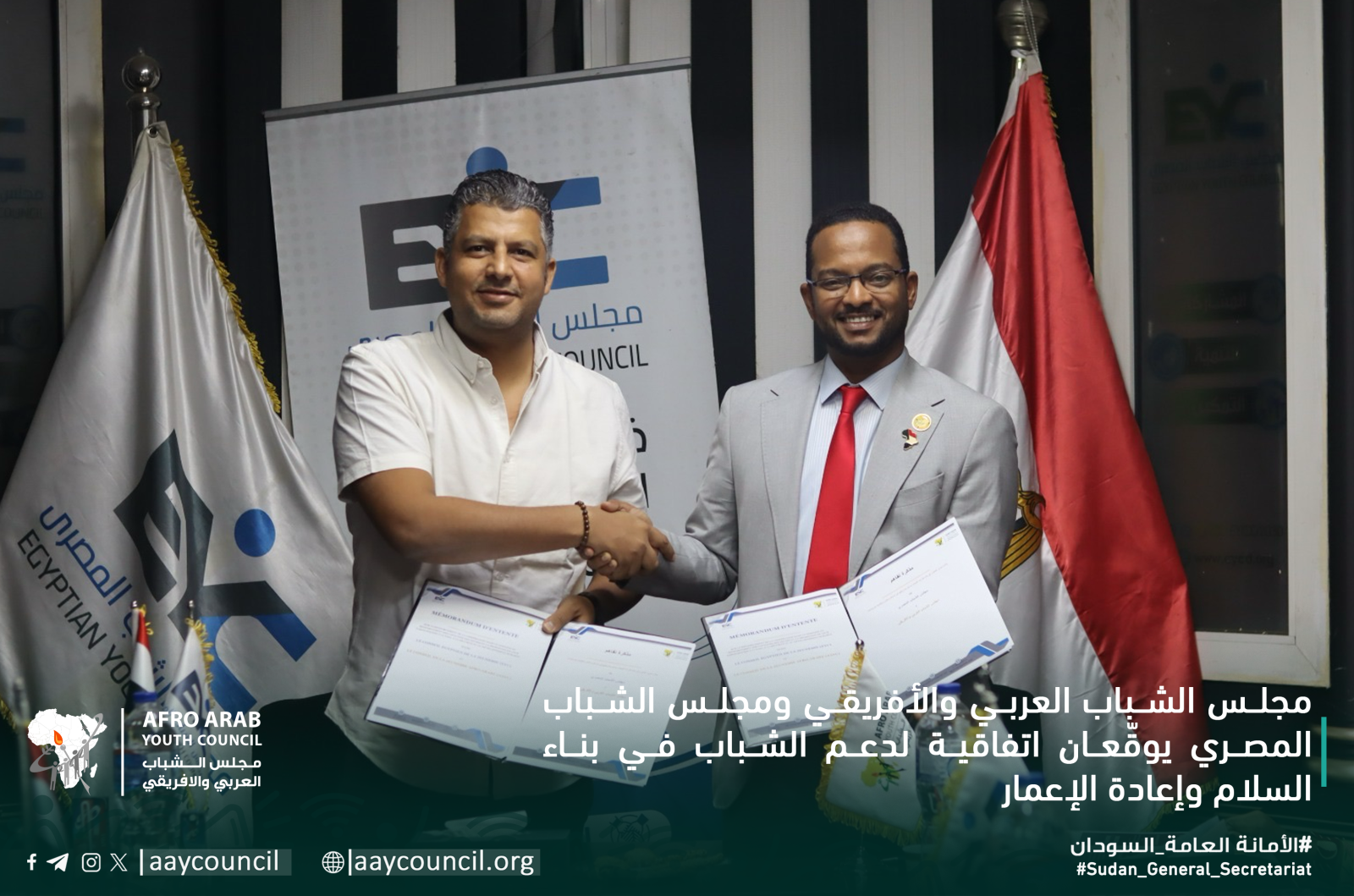
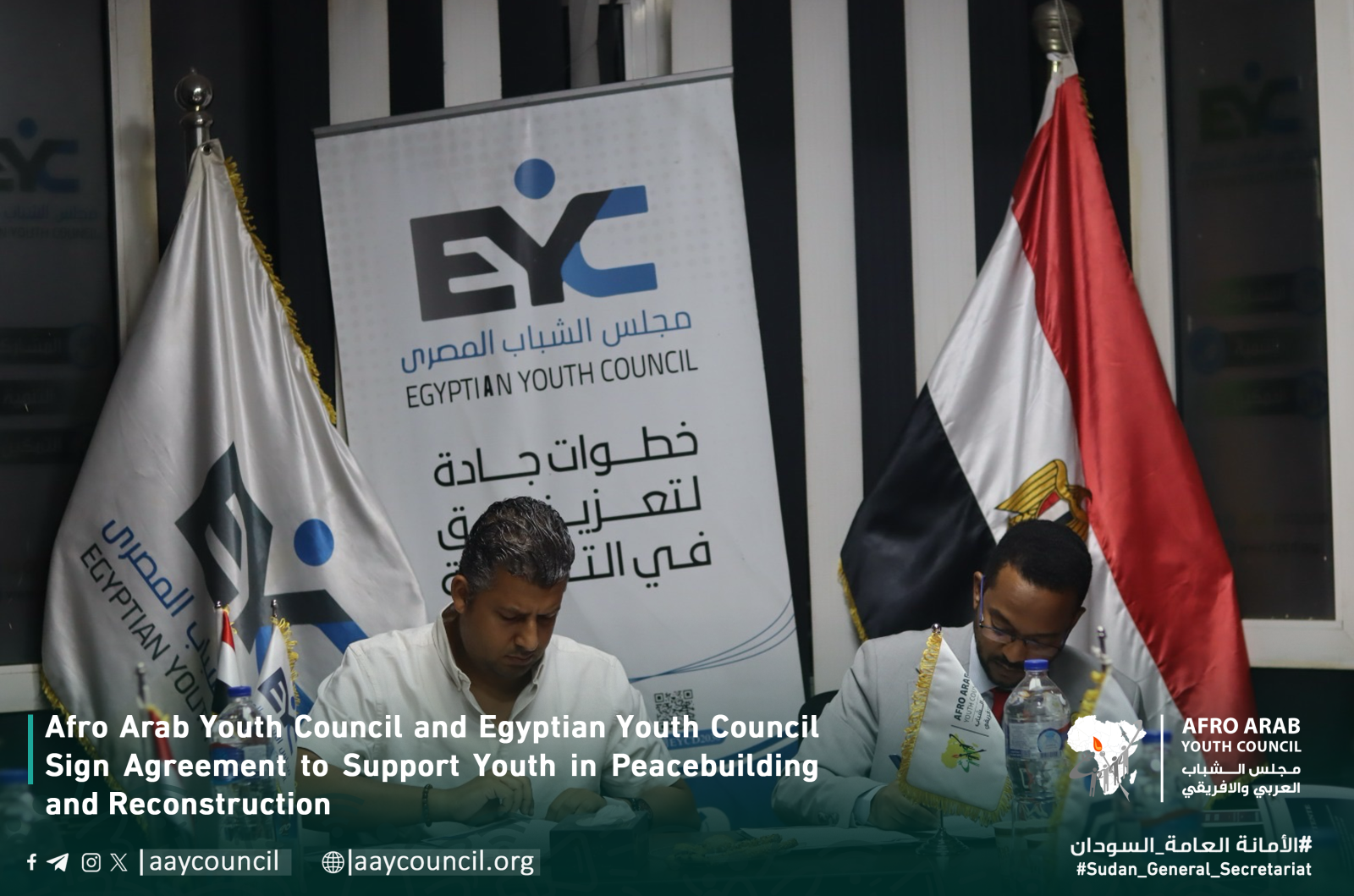
In a step reflecting the growing Arab African cooperation in support of Sudan, the Afro-Arab Youth Council (AAYC) and the Egyptian Youth Council signed a Memorandum of Understanding aimed at developing an institutional partnership to support Arab and African youth, with priority at the current stage given to Sudanese youth, strengthening their participation in peacebuilding and social cohesion efforts, and contributing to recovery and reconstruction.
The agreement was signed by the Secretary-General of the Afro-Arab Youth Council, Eng. Huzyfa Elhassan, and the Chairman of the Board of Trustees of the Egyptian Youth Council, Dr. Mohamed Mamdouh, in the presence of the Assistant Secretary-General for Francophone Countries, Ms. Fadimatou Iyawa Ousmanou, and several members of the Council’s General Secretariat.
The memorandum includes the development of joint programmes to equip Sudanese youth leaders with skills in leadership, dialogue, and community mediation, support youth initiatives to promote peace, coexistence, and social cohesion, and strengthen the capacities of young people and civil society organisations to contribute to development and reconstruction, with a focus on the participation of youth and women.
The Secretary-General of the Afro-Arab Youth Council, Eng. Huzyfa Elhassan, affirmed that the partnership represents an opportunity to strengthen integration between Arab and African youth institutions. He noted that Sudanese youth possess significant capabilities and potential, and that the current phase requires specialised programmes that equip them to participate effectively in rebuilding society and promoting peace and development.
For his part, Dr. Mohamed Mamdouh, Chairman of the Board of Trustees of the Egyptian Youth Council, emphasised that Sudanese youth are not merely a group affected by war, but represent one of the most important sources of strength capable of overcoming its consequences. He stressed that any serious discussion about Sudan’s future must begin with investing in the capabilities of its youth and providing them with opportunities to participate in peacebuilding and the reconstruction of their communities.
This partnership comes within the framework of a shared vision to move from solidarity with Sudanese youth to practical partnerships for building their capacities, and from institutional understanding to field programmes and initiatives that contribute to peacebuilding, recovery, and reconstruction.
Both parties confirmed that they will work during the coming phase to prepare a joint implementation plan that includes training programmes and initiatives targeting Sudanese youth, while leveraging the Arab and African reach of both institutions to expand the scope of cooperation and strengthen its impact.